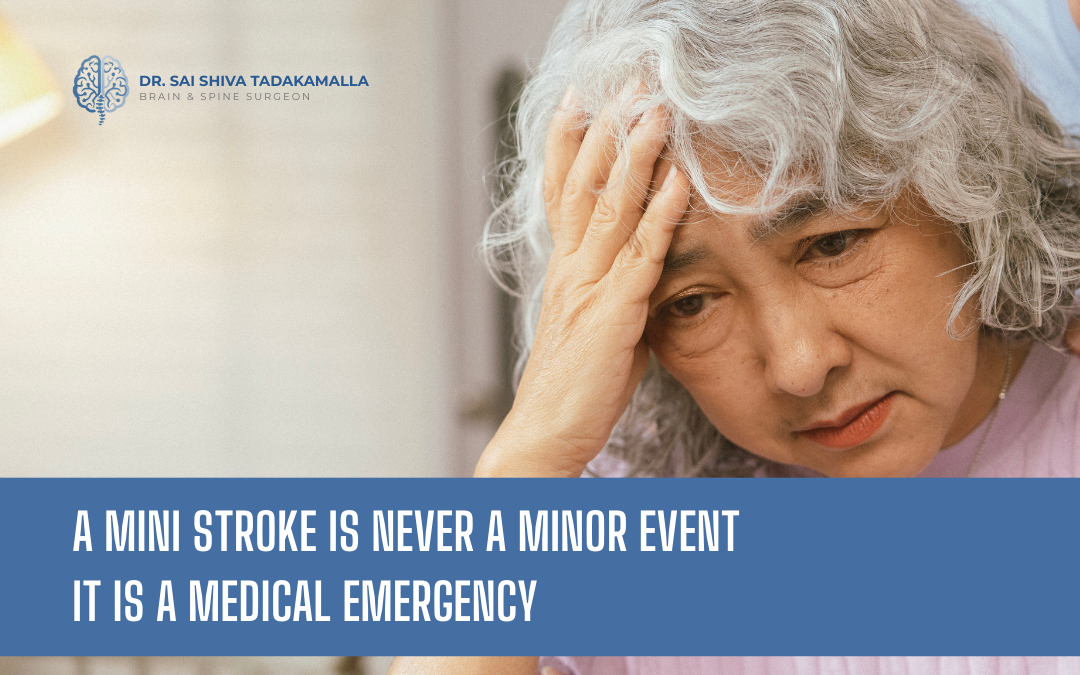
Picture this. Your father is sitting at the breakfast table when his hand suddenly feels numb. He drops his cup. A few minutes pass and he says he is fine. You both move on with the day.
What just happened may not have been nothing.
That brief episode could have been a mini stroke, also called a Transient Ischemic Attack or TIA. It is the brain sending an urgent warning. And in elderly patients, that warning is far too often dismissed as tiredness or just old age.
This blog by Dr. Sai Shiva Tadakamalla, neurosurgeon in LB Nagar, Hyderabad, will help you recognise what a mini stroke looks like, why it is dangerous in older adults, and what you need to do when it happens.
What Is a Mini Stroke (TIA)?
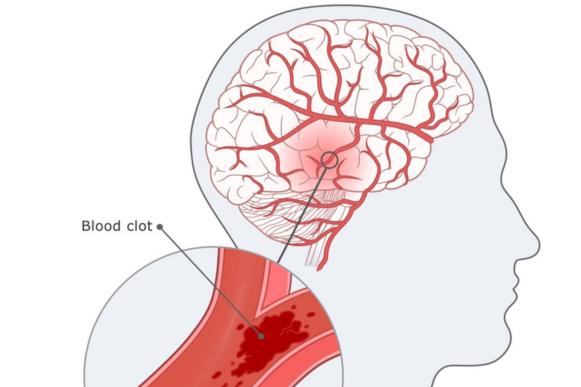
Brain Blood Flow Blockage During TIA
A mini stroke happens when blood flow to a part of the brain gets temporarily blocked. This causes stroke-like symptoms that usually last a few minutes to one hour and then resolve on their own.
Unlike a full stroke, a TIA does not cause permanent brain damage. But this is where most families make a critical mistake. Because the symptoms went away, they assume the problem is over.
Brain Blood Flow Blockage During TIA
It is not.
Research shows that 1 in 5 people who have a TIA will go on to have a full stroke within 90 days. Nearly half of those strokes happen within the first two days.
A mini stroke is never a minor event. It is a medical emergency.
“In my experience, many elderly patients who come to me after a stroke had a TIA days or even weeks earlier that went unrecognised. The body is trying to warn us. We need to listen to it.”
– Dr. Sai Shiva Tadakamalla, Consultant Cerebrovascular and Brain Surgeon, Gleneagles Aware Hospital, LB Nagar, Hyderabad
Common Mini Stroke Symptoms in the Elderly
Symptoms of a TIA come on suddenly. That sudden onset is one of the features that separates a TIA from other conditions. Here is what to watch for.
Sudden Weakness or Numbness on One Side
The face, arm, or leg on one side of the body may suddenly feel weak, heavy, or numb. The person may drop something, drag a foot while walking, or show a droop on one side of their face. In elderly patients this can look like simple unsteadiness and is easy to miss.
Difficulty Speaking or Understanding Speech
The person may struggle to find words, speak in a slurred or confused way, or be unable to understand what is being said to them. They may stop mid-sentence or respond with answers that do not make sense.
Sudden Vision Changes
A TIA can cause sudden blurring, double vision, or complete loss of vision in one eye. Some patients describe it as a dark curtain being pulled across their eye. It comes on suddenly and clears on its own.
Severe Unexplained Headache
A sudden, intense headache with no clear cause and no prior pattern can signal a vascular event in the brain. This is different from a typical migraine and tends to arrive without any warning.
Dizziness and Loss of Balance
The person may suddenly feel very dizzy, lose their footing, or be unable to walk straight. In elderly patients this is frequently written off as an inner ear problem or blood pressure drop.
Sudden Confusion or Memory Lapse
Brief episodes of not knowing where they are, being unable to recall something that just happened, or seeming completely disoriented can also signal a TIA. This is one of the most commonly missed symptoms in seniors.
Symptoms That Are Often Missed in Seniors
Not every TIA presents with the classic signs above. In older adults, a mini stroke can also look like this:
Sudden and unusual fatigue with no clear reason
A brief episode of choking or difficulty swallowing
Sudden inability to recognise familiar faces or surroundings
Feeling an overwhelming sense of fear or panic with no trigger
Brief loss of consciousness lasting only a few seconds
These symptoms are routinely attributed to ageing, dementia, or dehydration. That delay in recognition is one of the main reasons elderly patients end up having a full stroke before anyone acts.
“The subtle symptoms are the ones I worry about most. A patient with face drooping usually gets to hospital. But the one who just felt briefly confused or suddenly very tired often does not. That delay is dangerous.”
– Dr. Sai Shiva Tadakamalla, Neurosurgeon in LB Nagar, Hyderabad
Use the BE FAST Test
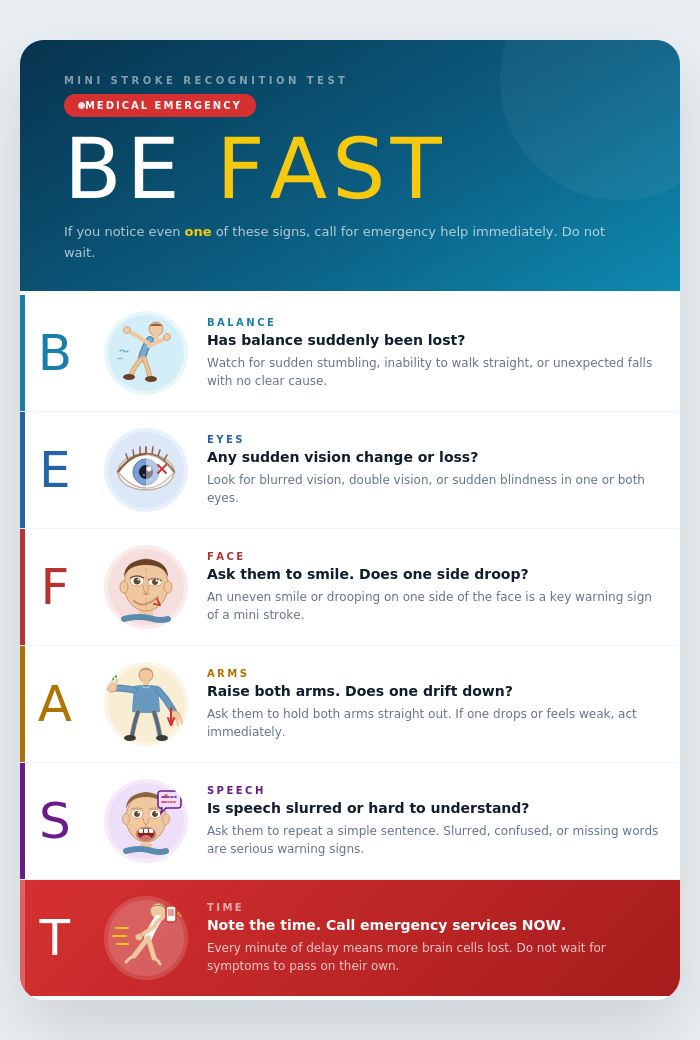
When you suspect someone is having a mini stroke, use the BE FAST method. It takes under a minute and can be done anywhere.
| Letter | Stands For | What to Check |
| B | Balance | Has balance suddenly been lost? |
| E | Eyes | Any sudden vision change or loss? |
| F | Face | Ask them to smile. Does one side droop? |
| A | Arms | Ask them to raise both arms. Does one drift down? |
| S | Speech | Ask them to repeat a sentence. Is speech slurred or strange? |
| T | Time | One or more yes answers means call for emergency help immediately |
Do not wait to see if symptoms improve before calling for help. Every minute counts.
BE FAST Mini Stroke Recognition Test
Noticed any of these symptoms in a parent or elderly family member? Do not wait for it to happen again. Consult Dr. Sai Shiva Tadakamalla, Cerebrovascular and Brain Surgeon at Gleneagles Aware Hospital, LB Nagar, Hyderabad.
Mini Stroke vs Full Stroke: Know the Difference
In the moment, it is nearly impossible to tell a TIA from a full stroke. The symptoms are identical. The only difference is that TIA symptoms resolve on their own, while stroke symptoms persist and cause permanent damage.
This table helps explain it clearly:
| Feature | Mini Stroke (TIA) | Full Stroke |
| Duration of symptoms | Minutes to 1 hour | More than 1 hour, often permanent |
| Permanent brain damage | No | Yes |
| Symptoms resolve on their own | Yes | No |
| Requires emergency treatment | Yes | Yes |
| Risk of full stroke after | Very high | High risk of second stroke |
The key takeaway: Both require immediate emergency evaluation. Neither should be managed at home.
Risk Factors in Elderly Patients
Some elderly individuals carry a higher risk of TIA than others. The most common risk factors include:
High blood pressure (the single biggest contributor)
Type 2 diabetes
High cholesterol
Atrial fibrillation (irregular heartbeat that can send clots to the brain)
Carotid artery disease (narrowing of the arteries supplying the brain)
Smoking or a history of smoking
Previous TIA or stroke
In India, hypertension and diabetes are extremely common in older adults and are often poorly controlled. This makes Indian elderly patients particularly vulnerable to TIA and stroke.
What to Do When It Happens: A Quick Guide for Families
If you suspect a mini stroke, act immediately. Do not wait.
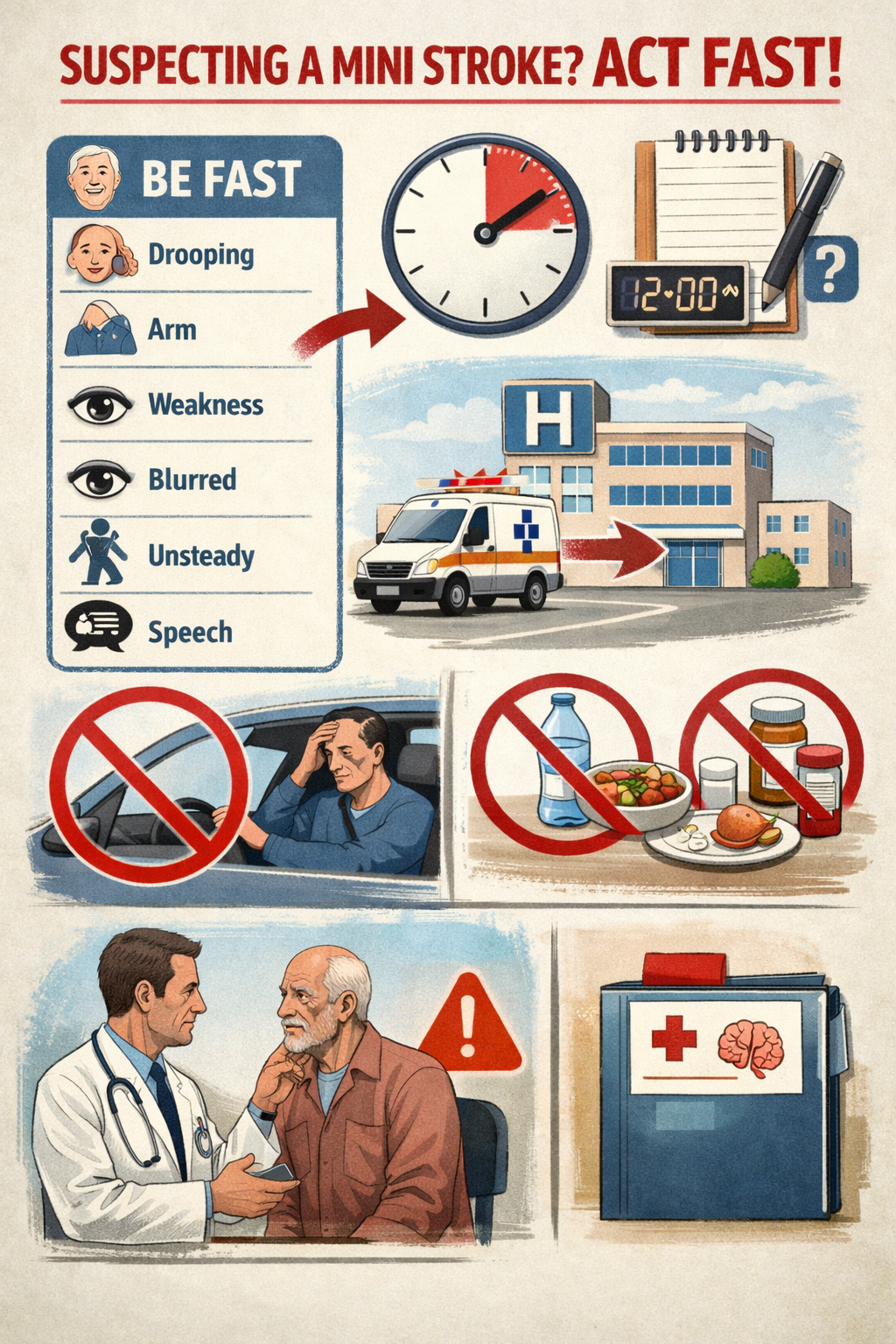
Note the exact time the symptoms started. This is critical information for the treating doctor.
Do the BE FAST check.
Take them to the nearest hospital with a neurology or neurosurgery unit. Do not drive yourself if you are the one experiencing symptoms.
Do not give food, water, or any medication unless a doctor instructs you to.
If the person has had a TIA before, tell the medical team straight away.
The emergency evaluation will typically include a brain MRI or CT scan, blood tests, an ECG to check heart rhythm, and a carotid artery ultrasound to look for blockages. Based on findings, the doctor will recommend medication, a procedure, or surgery to prevent a full stroke from occurring.
Dr. Sai Shiva Tadakamalla performs cerebrovascular surgery including carotid artery procedures at Gleneagles Aware Hospital, Hyderabad.
“A TIA is the body giving you a second chance. If we act on it quickly, we can prevent a stroke in most cases. The treatment works. The problem is that too many patients come to us after the stroke has already happened.”
– Dr. Sai Shiva Tadakamalla, Consultant Brain and Spine Surgeon, Gleneagles Aware Hospital, LB Nagar, Hyderabad
Has someone in your family had a brief episode of weakness, confusion, or vision change that passed quickly? Get them evaluated immediately. Early assessment can prevent a life-altering stroke.
Frequently Asked Questions
What is the most common mini stroke symptom in elderly patients?
The most common symptoms are sudden weakness or numbness on one side of the body, difficulty speaking, and sudden dizziness. In elderly patients these are often subtle and mistaken for fatigue or age-related issues. Any sudden neurological change needs immediate medical attention.
How long does a mini stroke last?
A TIA typically lasts from a few minutes to one hour. Symptoms resolve within 24 hours by definition. However, even a 5-minute episode carries a significant risk of full stroke in the days that follow.
Can a mini stroke happen without the person knowing?
Yes. Some TIAs produce only very mild symptoms like brief confusion or slight dizziness that the person does not register as a medical event. These are sometimes found incidentally on brain scans taken for other reasons.
Is a mini stroke always followed by a full stroke?
Not always. With prompt evaluation and appropriate treatment, the risk of a subsequent stroke can be significantly reduced. Without treatment, however, the risk in the 90 days following a TIA is very high.
Which doctor should I consult after a mini stroke in Hyderabad?
Consult a neurosurgeon or cerebrovascular specialist. Dr. Sai Shiva Tadakamalla is a consultant cerebrovascular and brain surgeon at Gleneagles Aware Hospital, LB Nagar, Hyderabad, and specialises in the evaluation and management of TIA and cerebrovascular conditions.
For cerebrovascular concerns in Hyderabad, Dr. Sai Shiva Tadakamalla is available at Gleneagles Aware Hospital, LB Nagar. Monday to Saturday, 9 AM to 5 PM.
References:
- American Stroke Association. Transient Ischemic Attack. Available at: https://www.stroke.org/en/about-stroke/types-of-stroke/tia-transient-ischemic-attack
- Cleveland Clinic. Transient Ischemic Attack (TIA). Available at: https://my.clevelandclinic.org/health/diseases/14173-transient-ischemic-attack-tia-or-mini-stroke
- Mayo Clinic. Transient Ischemic Attack: Symptoms and Causes. Available at: https://www.mayoclinic.org/diseases-conditions/transient-ischemic-attack/symptoms-causes/syc-20355679
Disclaimer: The information shared in this content is for educational purposes only and not for promotional use.