
Cervical Disc Prolapse with Myelopathy: Successful Treatment with Anterior Discectomy and Fusion in Hyderabad
Doctor’s Name: Dr. Sai Shiva Tadakamalla
Patient’s Name: Mrs. G. Anantha
Patient’s Age: 56
Gender: Female
Patient Feedback:
“I had been living with this neck pain and weakness for a long time and kept hoping it would get better on its own. It only kept getting worse. After the surgery, the tingling in my hands reduced almost immediately. I am so grateful to Dr. Sai Shiva and his entire team. They took such good care of me and explained everything clearly. I feel like myself again.”
– Mrs. G. Anantha, Patient
Patient Background
Mrs. G. Anantha, a 56-year-old woman from Hyderabad, presented with severe neck pain that had been gradually worsening over time. Along with the pain, she began experiencing tingling and numbness in both her arms and legs, followed by progressive weakness in her limbs. These symptoms had started affecting her daily routine significantly.
She was evaluated by Dr. Sai Shiva Tadakamalla, a trusted neurosurgeon in LB Nagar, Hyderabad, who identified a slipped disc in the neck (cervical disc prolapse) that was pressing on her spinal cord, a condition known as compressive myelopathy.
Symptoms
Severe and persistent neck pain
Tingling and numbness in both arms and legs
Progressive weakness in the upper and lower limbs
Difficulty with grip strength and walking
Diagnostic Method
An MRI of the cervical spine was performed, which revealed:
A herniated (slipped) disc in the neck compressing the spinal cord
Significant canal narrowing at the affected level
Changes in the spinal cord signal, confirming myelopathy
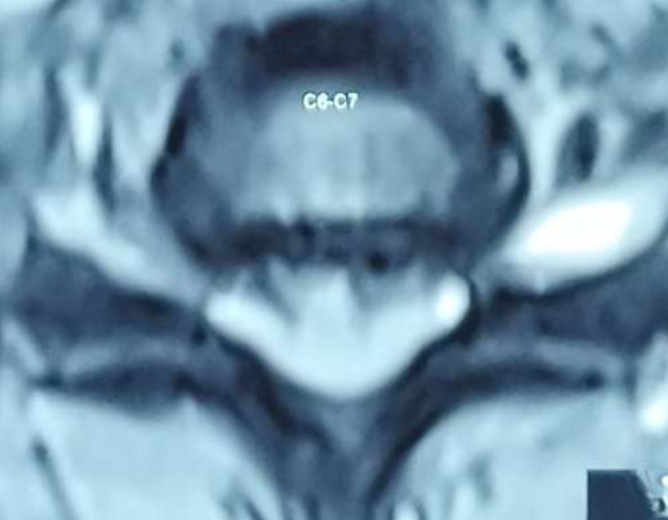
Axial MRI at C6-C7 Level Showing Spinal Cord Compression
A detailed neurological examination was also performed to assess the extent of limb weakness and sensory loss, along with a review of her overall health to confirm surgical fitness.
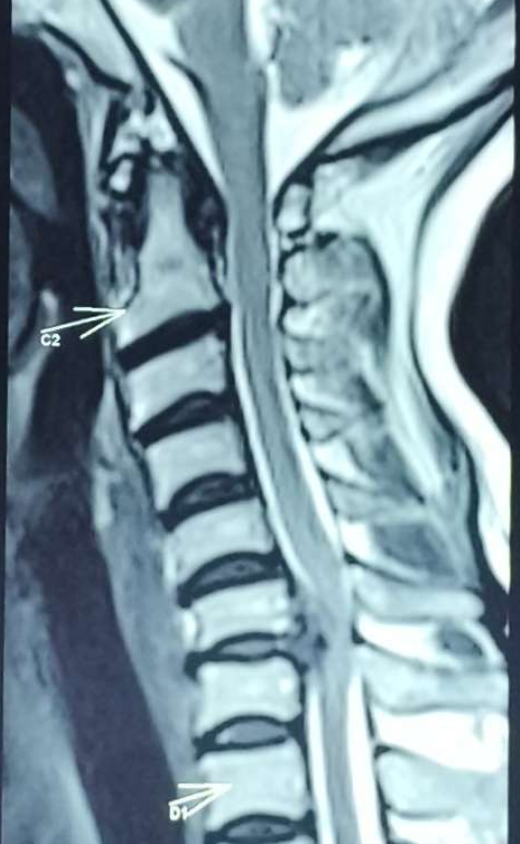
Sagittal MRI Cervical Spine Showing Disc Herniation
Disease Diagnosed
Cervical disc prolapse (slipped disc in the neck) at the affected vertebral level
Compressive cervical myelopathy with progressive neurological deficit
Treatment Plan
Challenges:
The spinal cord was already under significant pressure, with signs of progressive neurological deterioration
Mrs. Anantha had developed weakness in all four limbs, indicating that the window for recovery was narrowing
Precise surgical planning was needed to decompress the spinal cord completely while maintaining spinal stability after disc removal
Plan:
Dr. Sai Shiva Tadakamalla planned an Anterior Cervical Discectomy and Fusion (ACDF) using a Stand-Alone Cage. The anterior (front of the neck) approach was chosen for direct access to the compressed disc and to avoid disturbing the muscles at the back of the neck.
A stand-alone cage was selected over a traditional plate-and-screw construct to:
- Reduce the amount of hardware implanted
- Lower the risk of post-operative swallowing difficulty
- Achieve good fusion with a smaller surgical footprint
Surgery
As planned, Mrs. Anantha underwent Anterior Cervical Discectomy and Fusion (ACDF) with a Stand-Alone Cage. The damaged disc was carefully removed and the spinal cord was fully decompressed. The stand-alone cage was placed precisely in the disc space to restore the normal height between the vertebrae and promote bone fusion.
The spinal cord was adequately relieved of all pressure. The cage was stable and well-positioned. Mrs. Anantha tolerated the procedure well without any complications.
Post-Surgery Guidelines
- Mrs. Anantha was mobilised the following day with support and assistance
- Tingling and neck pain showed noticeable improvement within the first 48 hours
- She was discharged in stable condition within a few days of surgery
- She was advised on neck care, activity restrictions, and a gradual return to normal activities
- Follow-up visits and physiotherapy were recommended to support full neurological recovery
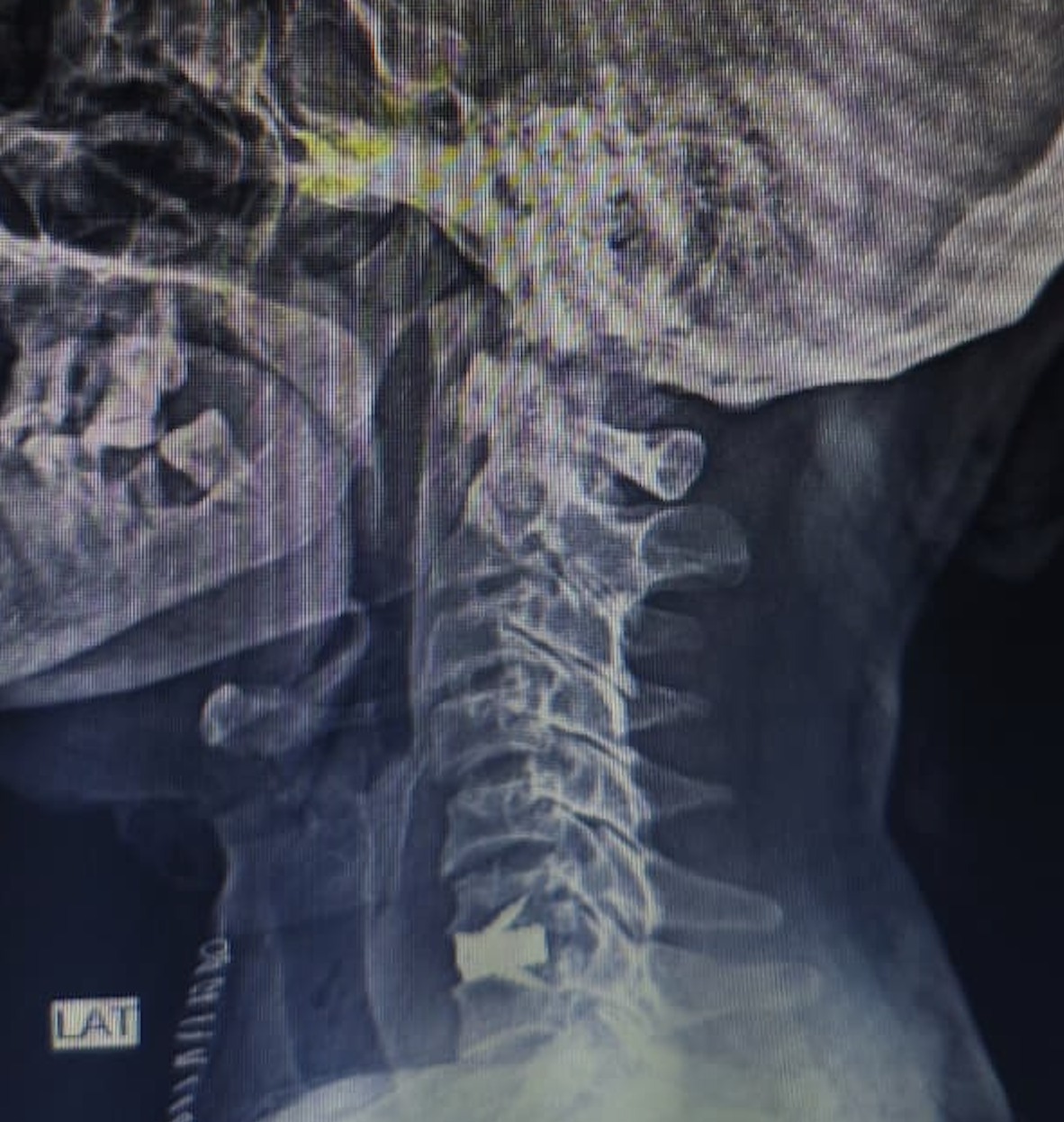
Post-Operative Cervical Spine X-Ray Showing Stand-Alone Cage Placement
Outcome
Mrs. Anantha showed significant improvement in limb strength and a clear reduction in tingling and neck pain following surgery. She was discharged in a stable condition and was able to perform basic daily activities with much greater ease compared to her condition at the time of admission.
She expressed her satisfaction with the care and support she received throughout her treatment journey.
Long-Term Care
The long-term expectation for Mrs. Anantha is continued neurological recovery and improved quality of life. With regular follow-ups and guided physiotherapy, the fusion is expected to stabilise fully over the coming months, allowing her to return to normal daily activities without restrictions.
Dr. Sai Shiva emphasised that while surgery addresses the root cause of compression, consistent rehabilitation and periodic review are equally important for a complete and lasting recovery.
Disclaimer: The information shared in this content is for educational purposes only and not for promotional use.