
Spine Trauma Surgery In Hyderabad

A spine injury is not something that waits. Whether it is a road accident, a bad fall, or a sports injury, spine trauma can be life-changing in a matter of seconds. The damage can range from a hairline fracture to a complete spinal cord injury, and the treatment needs to be just as specific.
Dr. Sai Shiva Tadakamalla is a consultant neurosurgeon in Hyderabad, practising at Gleneagles Aware Hospital, LB Nagar. With 8 years of experience and advanced training in spine surgery and neurosurgical trauma care, he handles both emergency spine stabilisation and complex post-traumatic spine reconstruction.
If you or someone you know has suffered a spine injury, early evaluation by a qualified spine surgeon in Hyderabad is the most important step.
“Spine trauma needs to be taken seriously from the very first hour. The right intervention at the right time can mean the difference between walking again and not. I evaluate every case carefully before deciding on surgical or non-surgical management.”
– Dr. Sai Shiva Tadakamalla, Spine Surgeon in Hyderabad
What Is Spine Trauma Surgery?
Spine trauma surgery is a branch of neurosurgery that deals with injuries to the vertebral column and spinal cord caused by accidents, falls, sports injuries, or physical violence. These injuries can affect any part of the spine — cervical (neck), thoracic (mid-back), or lumbar (lower back).
The goal of surgery is to stabilise the spine, decompress the spinal cord or nerve roots, and restore as much function as possible. Some injuries can be managed without surgery, but many — especially those involving fractures with displacement, cord compression, or instability — require surgical intervention.
At Gleneagles Aware Hospital, Dr. Sai Shiva uses advanced imaging including CT scans and MRI to assess the injury precisely before recommending a treatment plan. The decision to operate is never taken lightly.
Not sure if your injury needs surgery? Let Dr. Sai Shiva take a look.
Types Of Spine Trauma Surgery Performed By Dr. Sai Shiva Tadakamalla
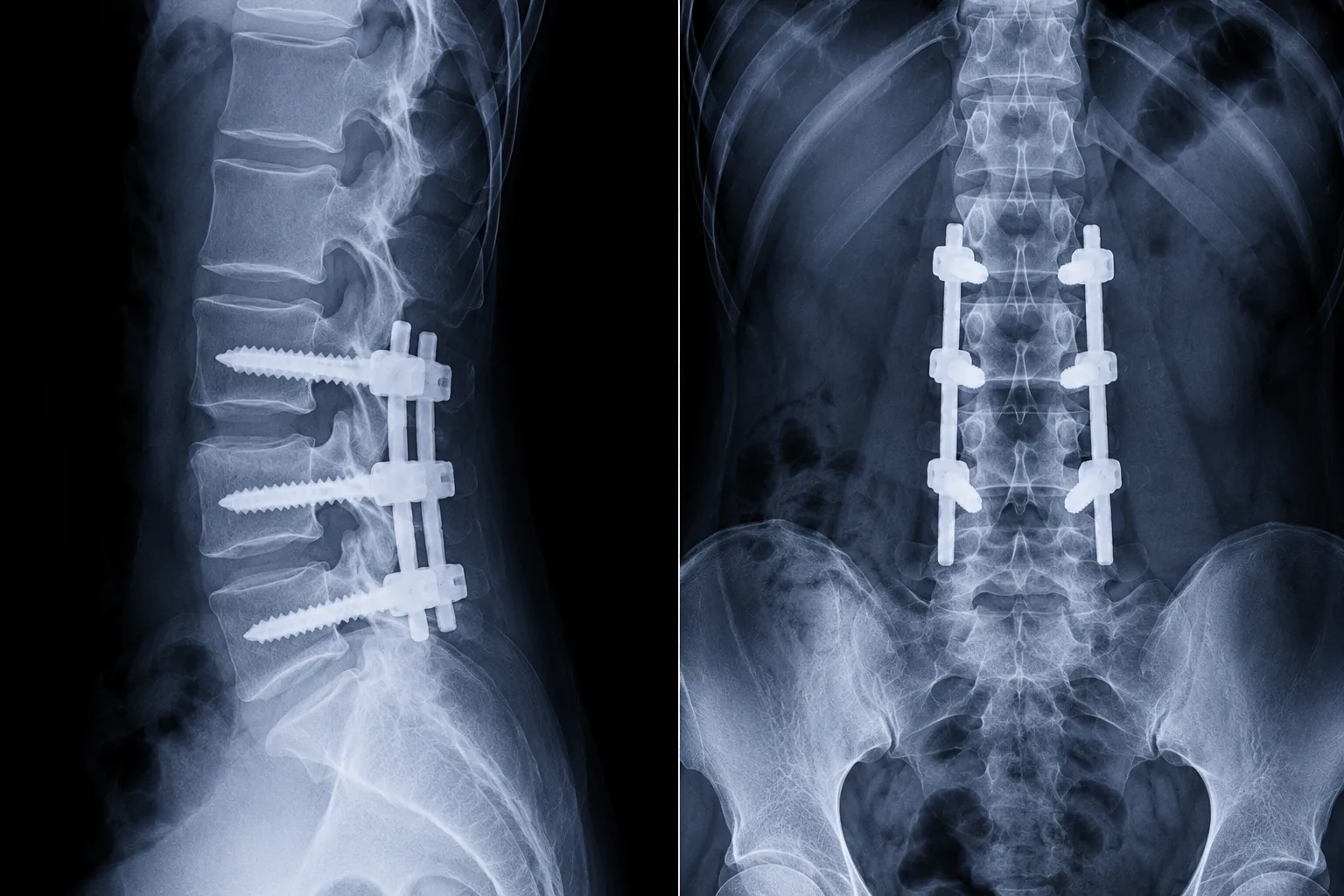
Spine Fracture Surgery
Surgical fixation when a vertebral fracture threatens the structural integrity of the spine or puts the spinal cord at risk.
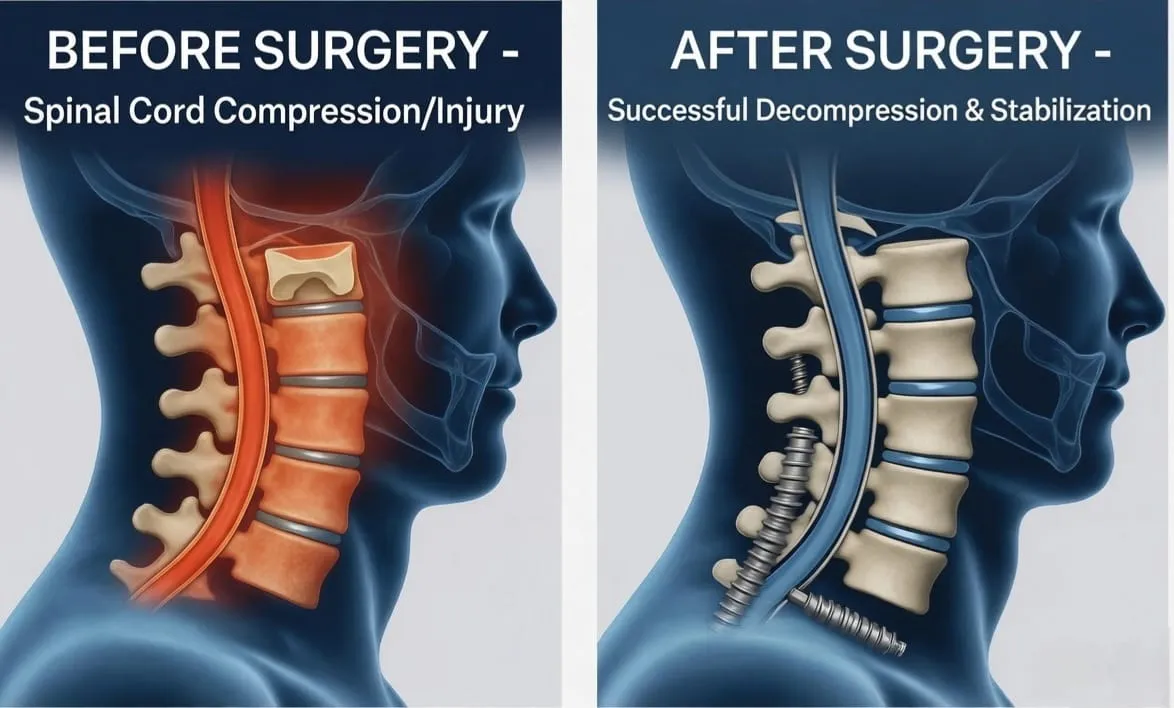
Spinal Cord Injury Surgery
Decompression of bone, disc, or haematoma pressing on the cord. Early surgery — ideally within 24 hours — gives the best chance of recovery.
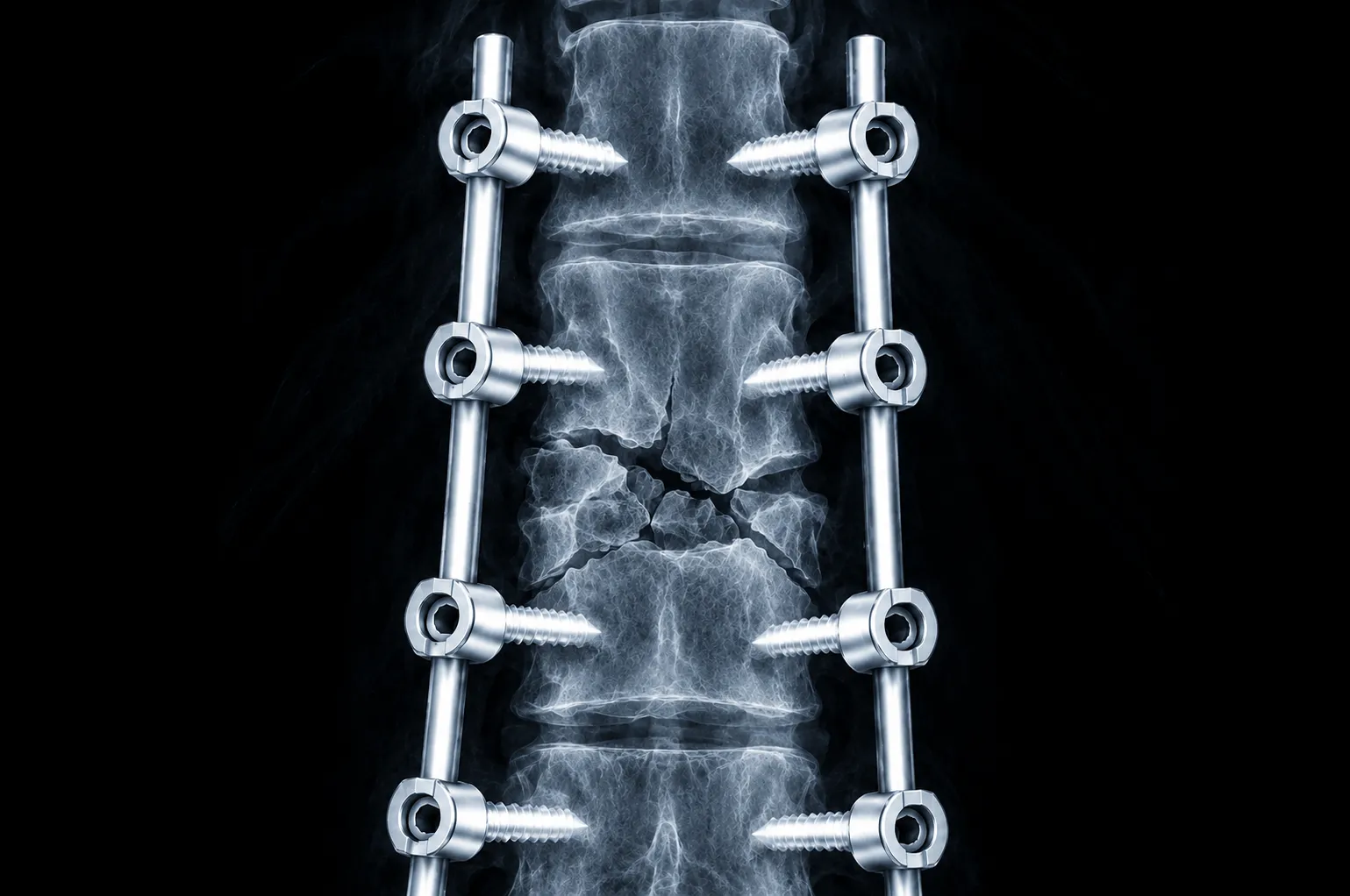
Emergency Spine Stabilisation
Immediate screw-rod fixation to prevent further neurological damage when the spine is mechanically unstable after trauma.
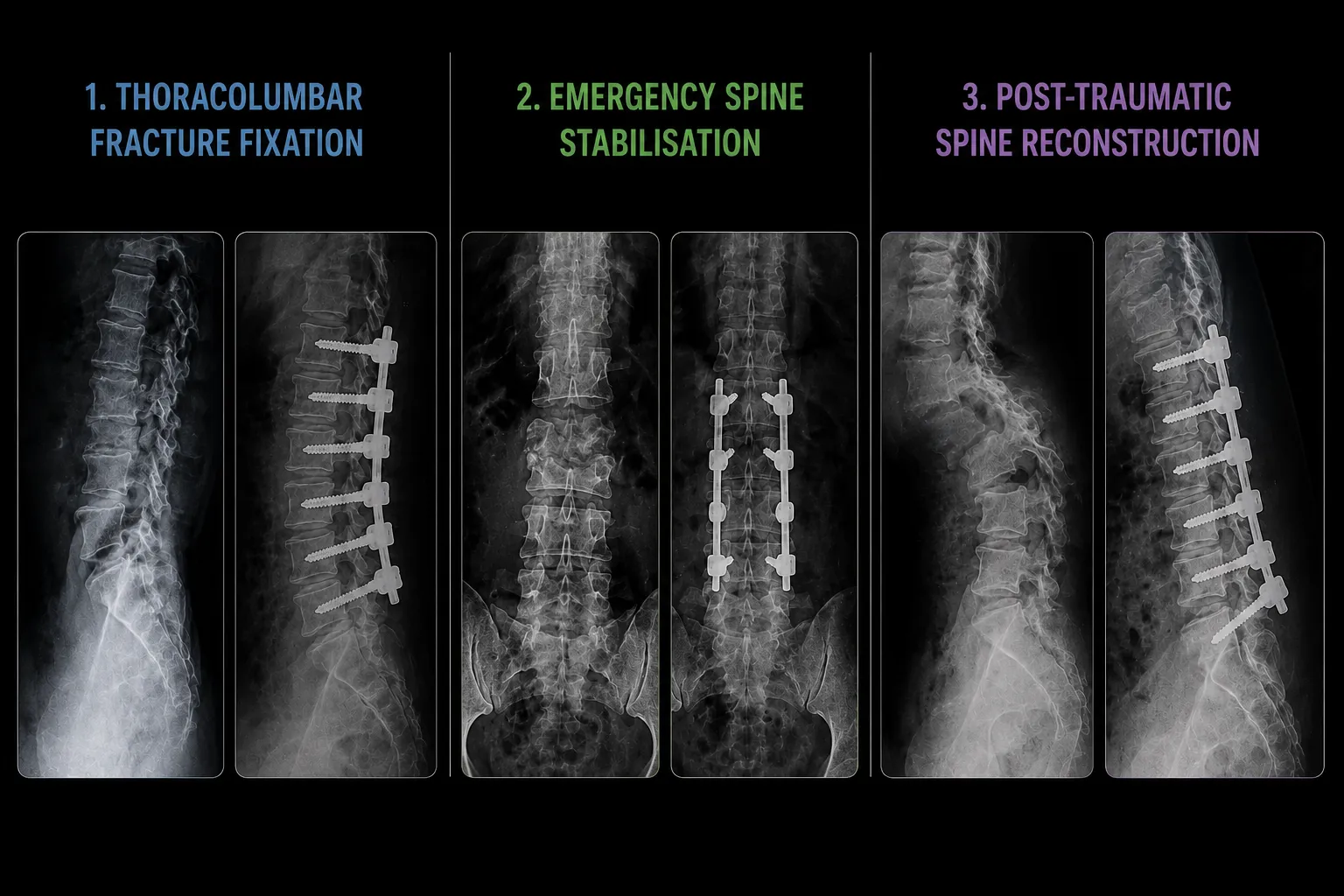
Post-Traumatic Spine Reconstruction
Corrective surgery for patients with chronic deformity, pain, or delayed neurological problems from an old spine injury that was undertreated.

Cervical Spine Injury Surgery
Neck fractures with cord involvement managed via ACDF, posterior fixation, or combined approaches depending on injury pattern.
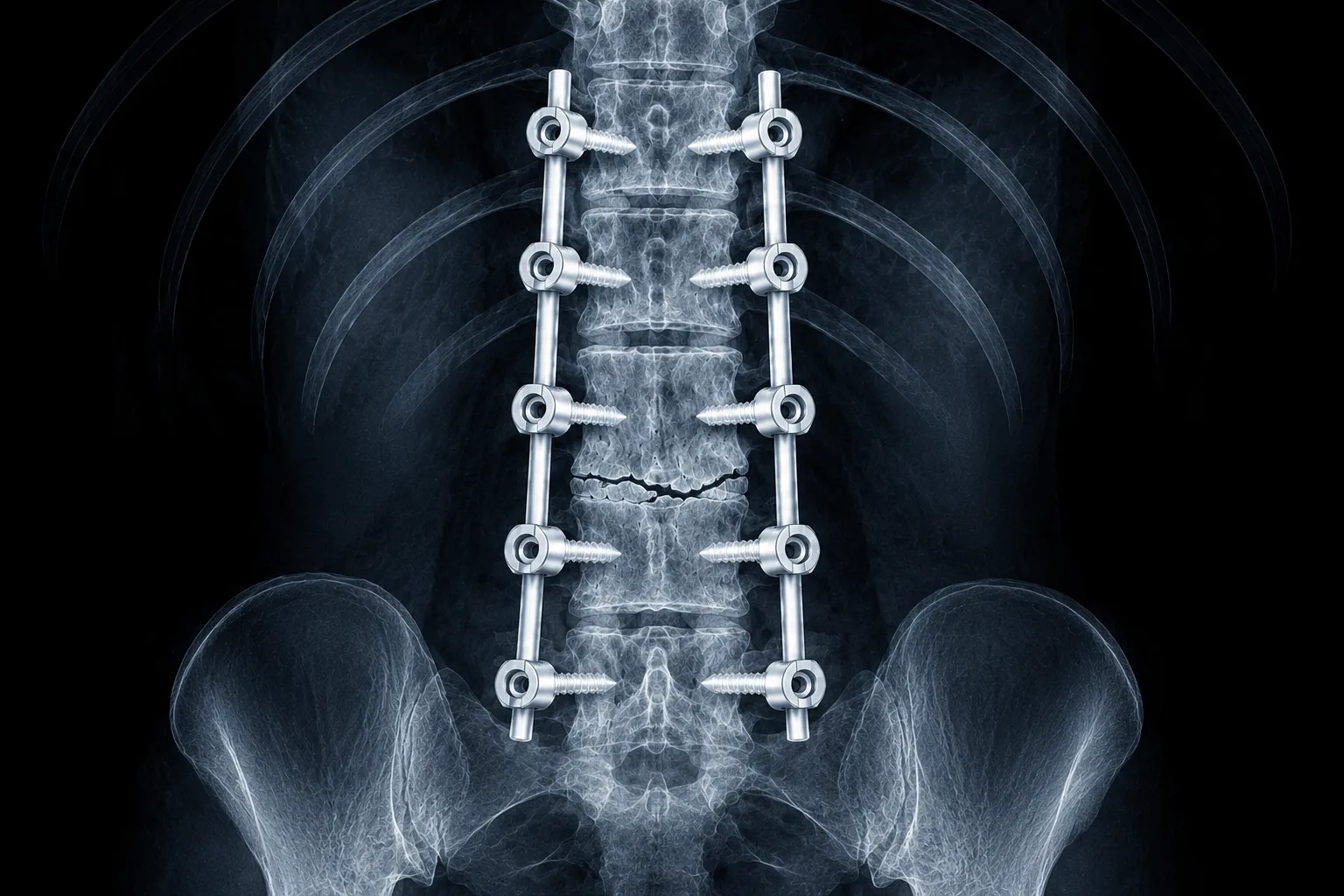
Thoracolumbar Fracture Fixation
Pedicle screw-rod fixation for fractures at the T10–L2 junction, the most common site of spine trauma.
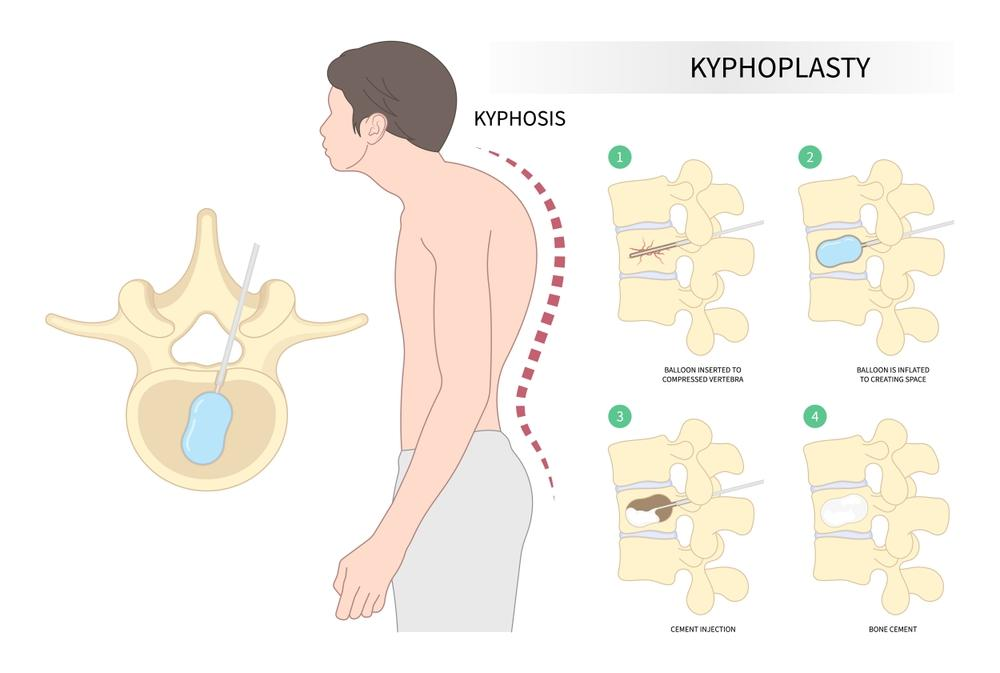
Vertebroplasty and Kyphoplasty
Minimally invasive cement injection into compression fractures — reduces pain and restores vertebral height without open surgery.
Every spine injury is different. Find out which treatment is right for you.
Symptoms Of Spine Trauma That Need Urgent Attention
Not every spine injury looks dramatic. Some are obvious. Others are subtle — but equally serious. Here are warning signs you should never ignore.
- Sudden, severe pain in the neck, mid-back, or lower back after an accident or fall
- Numbness or tingling in the arms, hands, legs, or feet
- Weakness in one or more limbs after trauma
- Difficulty walking or maintaining balance
- Loss of bladder or bowel control (surgical emergency)
- Electric shock sensation running down the spine on movement
- Visible deformity or tenderness directly over the spine
If you have experienced any of these symptoms after a trauma — even a minor one — do not wait. Early imaging and evaluation can prevent permanent damage.
These symptoms should never be ignored. Early action can protect your recovery.
When Is Spine Trauma Surgery Recommended?
Surgery is not always the first answer. But there are clear situations where it becomes necessary.

Unstable Fractures
When the vertebral fracture has disrupted spinal structural integrity and risks displacement.

Cord or Nerve Compression
Bone, disc, or blood clot pressing on the spinal cord or nerve roots — surgical decompression is required.

Neurological Deterioration
Worsening weakness, numbness, or loss of bladder/bowel function is a strong indication for emergency surgery.

Failed Conservative Care
When bracing and medications have not provided relief after 6 to 12 weeks of treatment.

Progressive Deformity
Post-traumatic kyphosis or vertebral collapse that worsens over time and causes further damage.
Surgical Approaches Used In Spine Trauma Surgery
Anterior approach
front-of-spine access for disc and vertebral body pathology
Posterior approach
back access for decompression and instrumented fixation
Combined 360-degree approach
for complex or multi-level injuries requiring full stabilisation
Minimally invasive spine surgery (MISS)
percutaneous pedicle screws for select fractures, reduced blood loss
Vertebral augmentation
vertebroplasty or kyphoplasty for compression fractures without cord involvement
Intraoperative neuromonitoring
real-time cord function protection during complex procedures
Recovery After Spine Trauma Surgery
Recovery after spine trauma surgery depends on the severity of the original injury, the type of surgery performed, and how quickly treatment was started.
Hospital Stay:
Most patients stay for 5 to 10 days post-surgery, depending on the procedure and neurological status.
Pain Management:
Pain is managed with a combination of medications and is gradually reduced as healing progresses.
Mobilisation:
Early mobilisation is encouraged wherever possible to prevent complications like deep vein thrombosis (DVT) and pressure sores.
Neurological Monitoring:
Patients with spinal cord injury are monitored closely by the neurosurgical team. Any changes in motor or sensory function are reviewed promptly.
Rehabilitation:
Physiotherapy and occupational therapy are started as early as the condition allows. Rehabilitation plays a major role in functional recovery after spinal cord injury.
Follow-Up Schedule:
Patients are reviewed at regular intervals for wound care, imaging review, and neurological assessment. Implant-related concerns, if any, are addressed during these visits.
Complete neurological recovery is not always guaranteed after spinal cord injury, but early and appropriate surgery significantly improves the chances of a better outcome.
Why Choose Dr. Sai Shiva Tadakamalla For Spine Trauma Surgery In Hyderabad?

Advanced Neurosurgical Training
MCh Neurosurgery and post-doctoral fellowship in Skull Base and Cerebrovascular Surgery from PGIMER Chandigarh, India’s premier institute.

Emergency Spine Surgery Experience
Trained in acute spinal cord injury management, emergency stabilisation, and Neuro ICU care at Gleneagles Aware Hospital, Hyderabad.

Expertise in Revision Spine Cases
Manages fresh fractures to post-traumatic deformities, including complex revision surgery for patients who did not recover from prior procedures.

Precision-Driven Technique
Uses intraoperative neuromonitoring, fluoroscopy, and image-guided systems to improve accuracy and safety of every fixation procedure.

Evidence-Based, Patient-First Approach
Weighs surgical and non-surgical options carefully, explains risks honestly, and involves the patient and family in every decision.

Clear Communication in Difficult Times
Explains diagnosis, surgical plan, and expected outcomes in plain language — for patients and families dealing with a frightening situation.

Clear Communication in Difficult Times
Explains diagnosis, surgical plan, and expected outcomes in plain language — for patients and families dealing with a frightening situation.
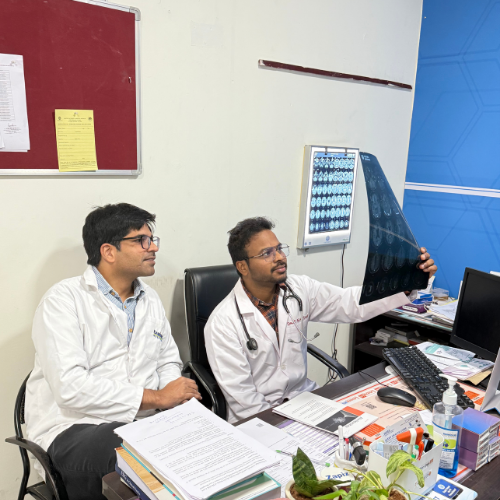
Dr. Sai Shiva Tadakamalla, Brain & Spine Surgeon in Hyderabad
“Spine trauma surgery is about more than fixing a fracture. It is about giving a person the best possible chance of recovery — physically and functionally. I take every spine injury personally, because I know what is at stake for the patient.”
– Dr. Sai Shiva Tadakamalla, Spine Surgeon, Gleneagles Aware Hospital, Hyderabad
You deserve answers, not more waiting. Take the first step today.
Frequently Asked Questions
Is surgery always needed after a spine fracture?
No, not always. Some spine fractures are stable and can be managed with a brace, pain medication, and rest. A spine surgery is recommended when the fracture is unstable, when it is causing pressure on the spinal cord or nerves, or when the patient is showing neurological deterioration. Dr. Sai Shiva evaluates each case individually before recommending any intervention.
What happens if a spinal cord injury is not treated quickly?
Delays in treating spinal cord compression can lead to permanent loss of motor and sensory function. Early surgical decompression — ideally within 24 hours of injury — is associated with better neurological recovery. If you notice signs of spinal cord injury after trauma, seek emergency medical care immediately.
How long does recovery take after spine trauma surgery?
Recovery time varies widely. For simpler fracture fixation, patients may be mobilised within a few days and discharged in about a week. For complex spinal cord injuries, rehabilitation can continue for months. Complete recovery depends on the severity of the original injury and how quickly treatment was started.
Will I be able to walk again after spine surgery?
This depends on the type and completeness of the spinal cord injury. If the cord has partial function (incomplete injury), the chances of meaningful recovery are higher with timely surgery and rehabilitation. In complete spinal cord injuries, recovery is more limited. Dr. Sai Shiva will discuss realistic expectations honestly with every patient and family.
What is post-traumatic spine reconstruction, and who needs it?
Post-traumatic spine reconstruction is corrective surgery for patients who have residual deformity, chronic pain, or progressive neurological problems from an older spine injury that was inadequately treated. It involves deformity correction, re-stabilisation, and sometimes cage-based fusion to restore spinal alignment. Patients with kyphosis after a prior fracture often benefit from this procedure.
“Even patients who were told nothing more can be done often find that a thorough re-evaluation opens new treatment options. It is always worth getting a second opinion from a specialist in spine trauma.”