
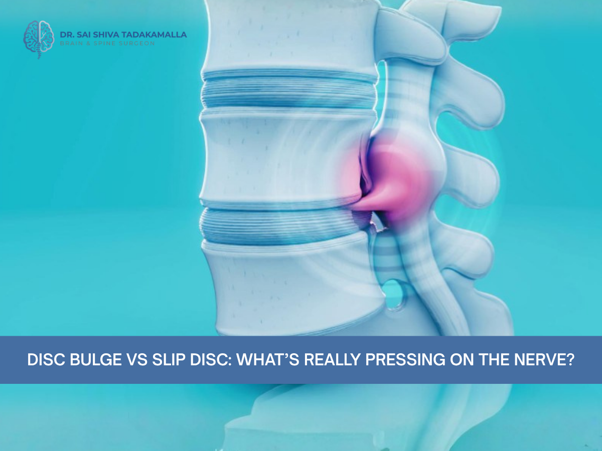
Introduction
Many people wonder about the difference between a disc bulge vs slip disc. Both can cause back pain and nerve problems, but they are not the same. Understanding these differences is important. It helps you know what might be pressing on your nerve and how to get the right treatment. In the United States, back pain is a leading cause of doctor visits. Knowing the facts can help you make better choices for your health.
What Is a Disc Bulge?
A disc bulge happens when the soft disc between your back bones pushes out a little. However, the outer layer of the disc stays unbroken. The bulge may press on nearby nerves, but it often does not cause severe pain. Still, some people feel discomfort or numbness. Disc bulges are common as we age. They can also happen after lifting heavy objects or sitting for long periods.
What Is a Slip Disc?
A slip disc, also called a herniated disc, is more serious. In this case, the disc’s outer layer tears. As a result, the soft inside leaks out. This material can press hard on spinal nerves. Because of this, a slip disc often causes sharp pain, tingling, or weakness. It can happen suddenly, such as after an injury or sudden movement.
Key Differences: Disc Bulge vs Slip Disc
Disc Bulge: The disc bulges out but does not break open.Slip Disc (Herniated Disc): The disc’s outer layer tears, and the inside leaks out.Disc bulges are often mild, while slip discs can cause severe symptoms.Slip discs are more likely to press on spinal nerves and cause nerve pain.
So, while both conditions affect the spine, they are not the same. Knowing which one you have can guide your treatment.
Common Symptoms and Warning Signs
Both disc bulges and slip discs can cause symptoms. However, the signs may differ in strength and type. For example, a disc bulge may cause mild back pain or stiffness. On the other hand, a slip disc can lead to stronger symptoms.Sharp or burning back painPain spreading to the arms or legsNumbness or tingling in hands or feetMuscle weaknessDifficulty walking or standing
If you notice sudden loss of bladder or bowel control, seek help right away. This can be a sign of a serious nerve problem.
Causes and Risk Factors
Many things can lead to disc bulges or slip discs. For instance, age is a big factor. As we get older, our discs lose water and become less flexible. This makes them more likely to bulge or tear. Other risk factors include:Lifting heavy objects the wrong wayRepetitive bending or twistingBeing overweightSitting for long periodsSmoking, which weakens the discsFamily history of disc problems
Because of these risks, it is important to take care of your back every day.
Diagnosis: How Doctors Tell Them Apart
Doctors use several steps to find out if you have a disc bulge or slip disc. First, they ask about your symptoms and medical history. Next, they do a physical exam. If needed, they may order tests such as:MRI scan: Shows detailed images of your spine and discsCT scan: Gives a clear view of bone and soft tissueX-rays: Rule out other causes of back painNerve tests: Check if nerves are affected
With these tools, doctors can see if the disc is bulging or has slipped. This helps them plan the best treatment for you. (Source: CDC, NIH)
Treatment Options for Each Condition
Treatment for disc problems depends on the type and severity. In many cases, simple steps can help. For mild disc bulges, doctors may suggest:Rest and gentle movementPain relief medicinePhysical therapyHot or cold packs
For slip discs, treatment may be more involved. Options include:Stronger pain medicinePhysical therapy to build strengthEpidural injections to reduce swellingSurgery, but only if other treatments fail
Most people feel better with non-surgical care. However, surgery may be needed if nerve compression is severe. (Source: WHO, PubMed)
Prevention and Lifestyle Tips
While you cannot stop aging, you can lower your risk of disc problems. Here are some tips:Exercise regularly to keep your back strongUse proper lifting techniquesMaintain a healthy weightTake breaks from sittingQuit smokingEat a balanced diet for bone health
By making these changes, you can protect your spine and reduce the chance of nerve pain.
Conclusion
In summary, knowing the difference between a disc bulge vs slip disc is key for back health. Both can press on nerves, but they are not the same. If you have back pain or nerve symptoms, do not wait. Consult a neurologist or spine specialist Dr. Sai Shiva for personalized advice and treatment options.