L4-L5 Disc Prolapse in a Young Patient: Successful Surgical Recovery Under Dr. Sai Shiva Tadakamalla in Hyderabad
Doctor’s Name: Dr. Sai Shiva Tadakamalla
Patient’s Name: Mr. Srinu D
Patient’s Age: 26
Gender: Male
Patient Feedback:
“I had been struggling with this back pain and leg pain for over a year. It was affecting my work and everything I did. After the surgery, I could feel the difference almost immediately. Dr. Sai Shiva and his team took great care of me. I am glad I did not wait any longer.”
– Mr. Srinu D, Patient
Patient Background
Mr. Srinu D, a 26-year-old male from Hyderabad, presented with one year of progressively worsening low back pain that radiated down both legs. Over time, he also developed tingling, numbness, and stiffness that began interfering with his daily activities and work.
Despite his young age, his symptoms had reached a point where conservative management was no longer sufficient. He was evaluated by Dr. Sai Shiva Tadakamalla, neurosurgeon in LB Nagar, Hyderabad.
Symptoms
Persistent low back pain for one year, gradually worsening
Pain radiating to both legs (bilateral sciatica)
Tingling and numbness in the lower limbs
Stiffness and restricted movement
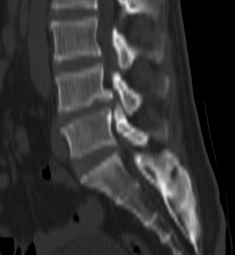
Sagittal CT Scan Lumbar Spine Showing Spinal Canal Stenosis at L4-L5
Diagnostic Method
A CT scan of the lumbar spine was performed, which revealed:
L4-L5 disc prolapse (PIVD) with significant nerve root compression
Spinal canal stenosis at the L4-L5 level
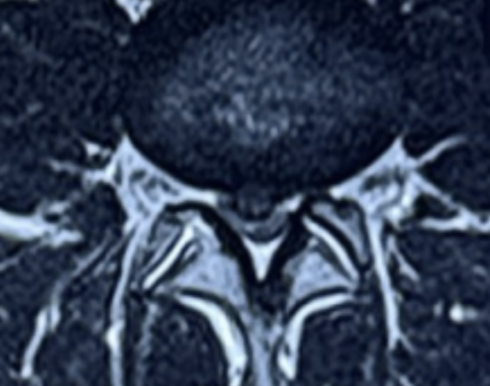
Axial MRI Showing Bilateral Nerve Root Compression at L4-L5
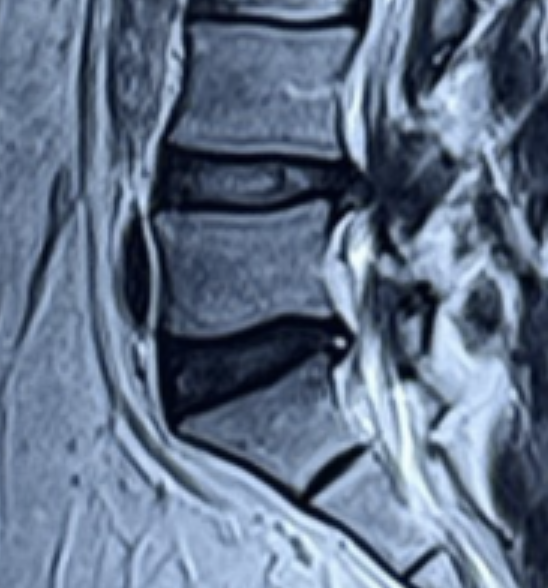
Sagittal MRI Lumbar Spine Showing L4-L5 Disc Prolapse
Disease Diagnosed
L4-L5 Prolapsed Intervertebral Disc (PIVD)
Bilateral nerve root compression with spinal canal stenosis
Treatment Plan
Challenges:
The patient was only 26 years old, making it important to choose a procedure that would deliver long-term relief with minimal risk
Bilateral leg symptoms indicated compression affecting nerve roots on both sides
Spinal canal stenosis added complexity to the decompression required
Plan:
Dr. Sai Shiva Tadakamalla planned an L4 laminectomy combined with L4-L5 discectomy to directly decompress the compressed nerve roots and relieve the spinal canal stenosis at the affected level.
Surgery
Mr. Srinu D underwent L4 laminectomy and L4-L5 discectomy as planned. The procedure involved removing the portion of the lamina at L4 to access the spinal canal, followed by careful removal of the prolapsed disc material compressing the nerve roots.
The nerve roots were fully decompressed. The patient tolerated the surgery well with no intraoperative complications.
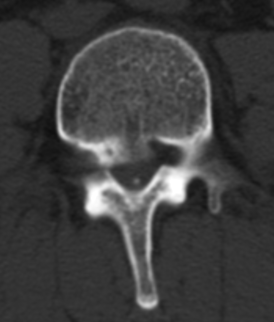
Axial CT Scan Showing Spinal Canal Compromise Before Surgery
Post-Surgery Guidelines
- Srinu was monitored in the ICU post-operatively for close observation
- Managed with antibiotics, pain relief medication, and supportive care
- Showed smooth and steady recovery with significant symptom improvement
- Wound healing was healthy with no signs of infection
- Advised on activity restrictions, back care, and gradual return to normal routine
- Physiotherapy recommended for strengthening and long-term spine health
Outcome
At the time of discharge, Mr. Srinu D was stable and comfortable. His back and leg pain had reduced significantly. Neurological strength in his lower limbs was intact. The surgical wound was clean and healing well.
This case shows that even in young patients with significant disc prolapse and canal stenosis, timely surgery can deliver safe and effective results with a smooth recovery.
Long-Term Care
With regular follow-ups and guided physiotherapy, Mr. Srinu is expected to make a full recovery and return to his normal lifestyle. Dr. Sai Shiva advised him to maintain a healthy posture, avoid heavy lifting in the early recovery phase, and stay consistent with his rehabilitation exercises to prevent recurrence.
Disclaimer: The information shared in this content is for educational purposes only and not for promotional use.